
Construction Vehicles
Mobile Concrete Batching Plant
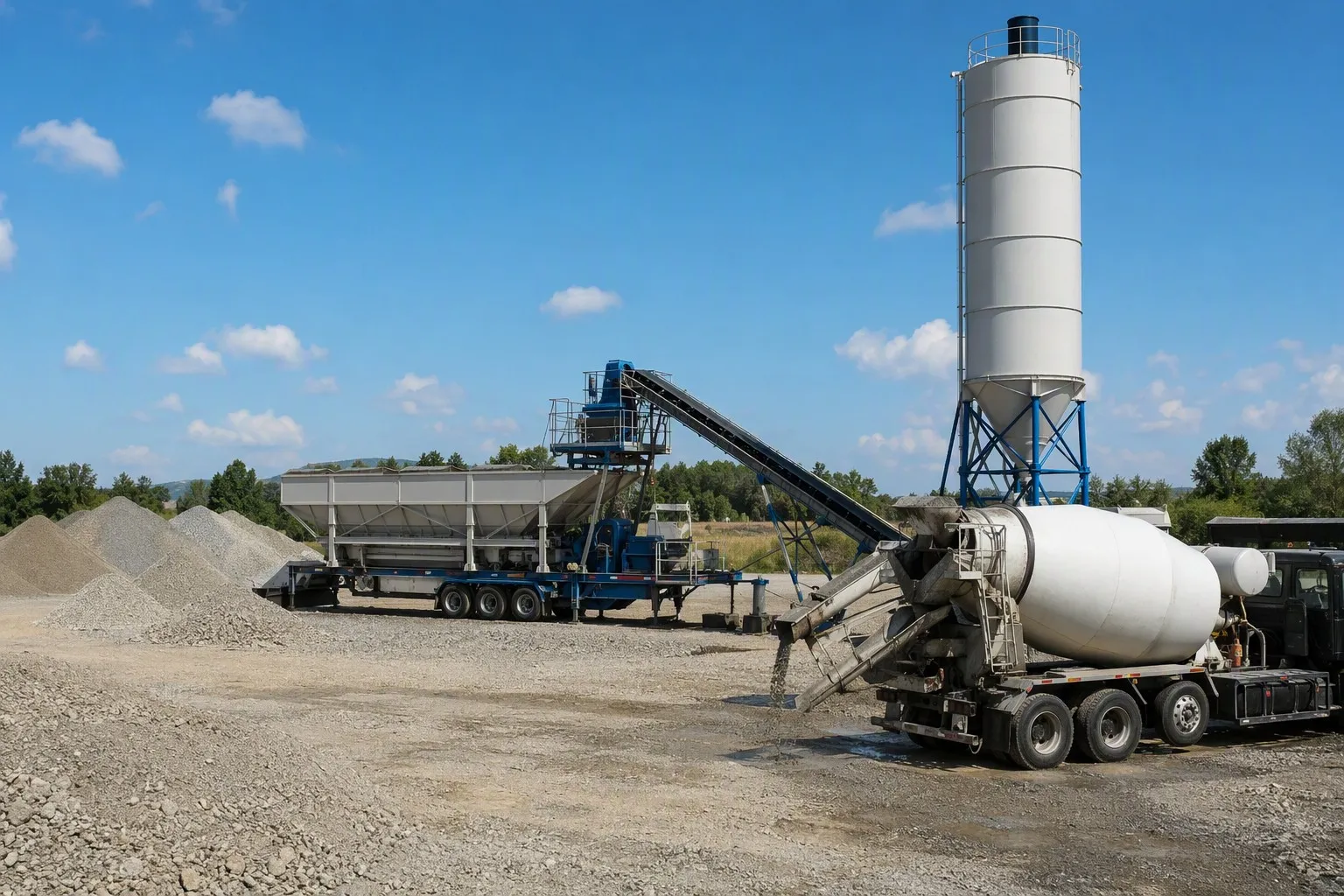
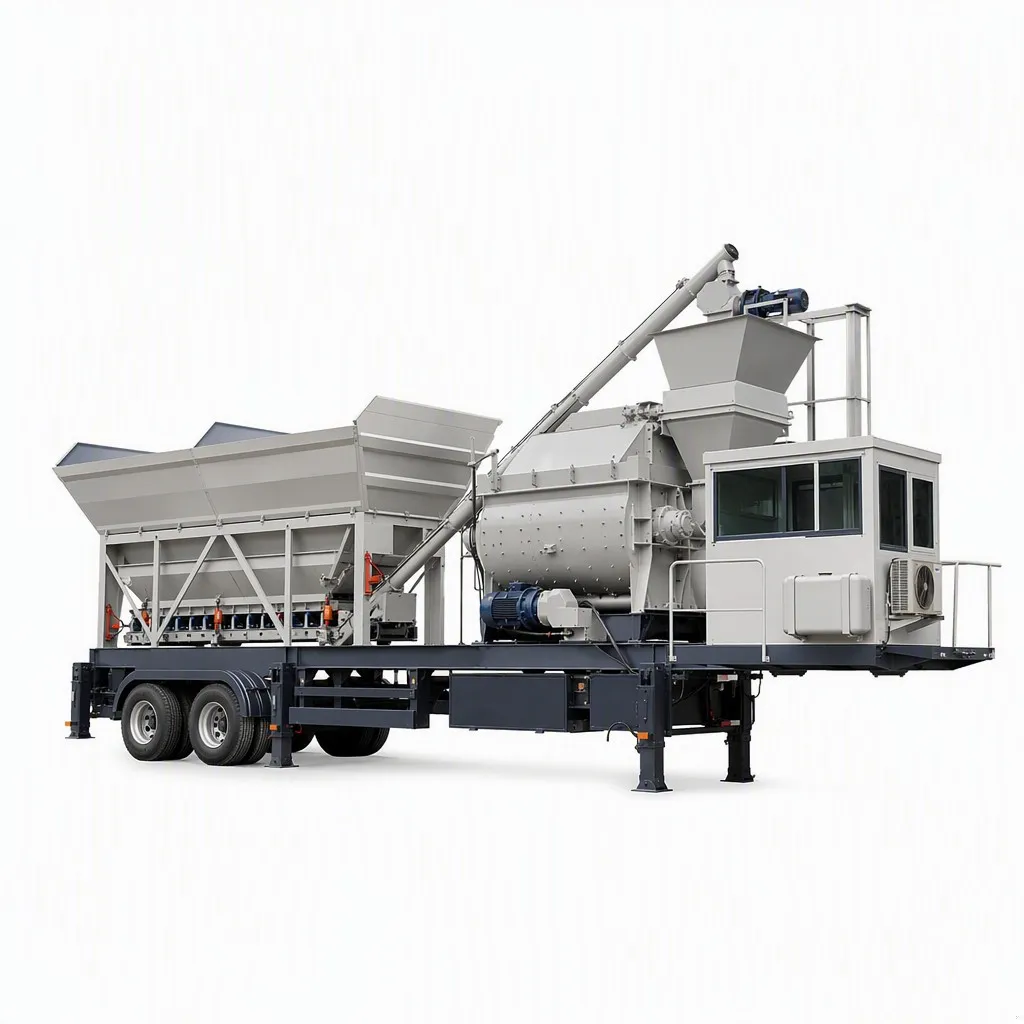
A mobile batching plant integrates aggregate bins, cement weighing, water and additive dosing and a twin-shaft mixer on one trailer chassis, so it can be towed to a site, levelled and producing concrete within a day. OCALWA supplies mobile plants from 8 to 25 m³/h, matched to your output and the materials you can source locally.
A full plant on one towable chassis
Aggregate is loaded into multi-compartment bins and weighed on a belt or weigh-hopper; cement, water and admixtures are dosed by load cell; and everything drops into a twin-shaft compulsory mixer that produces a uniform batch in under a minute. A PLC console with printout controls recipes, moisture compensation and batch records.
Because it tows as one unit, setup is fast and re-deployment between sites is simple, making it ideal for rural work, scattered pours or a startup ready-mix operation before investing in a fixed stationary plant.
Key features
Specifications
| Output | 8 · 12 · 18 · 25 m³/h (theoretical, per model) |
|---|---|
| Mixer | Twin-shaft compulsory, 330 to 750 L per batch |
| Aggregate bins | 2 to 4 compartments, batched by belt or weigh-hopper |
| Weighing | Cement / water / additive by load cell, ±1% to ±2% |
| Cement supply | Screw conveyor from silo or bag hopper |
| Control | PLC console, manual override, batch printout |
| Chassis | Single towable trailer, support legs / outriggers |
| Power | Three-phase electric (genset option) |
| Options | Cement silo 50 to 100 t, extra bins, moisture probe |
| Certification | Available with CE / factory QC report |
Configurations & options
Output, mixer size and silo are matched to your daily volume and materials. Tell us the m³ per day, aggregate sizes and power available and we specify the plant.
Why choose a mobile batching plant
Fast to deploy, easy to move
Towed as one unit, it needs only a level pad and power to run, and re-locates between sites without dismantling a tower.
Consistent, certified concrete
Load-cell weighing and PLC recipes give repeatable strength batch after batch, with printed records for project quality control.
Lower entry cost than a fixed plant
It lets you start producing your own concrete, cutting reliance on distant ready-mix suppliers, before committing to a stationary plant.
Ready to import at container scale?
Frequently asked questions
Because the plant tows as one assembled unit, a prepared level pad and a three-phase supply (or genset) are usually enough to be batching within a day of arrival. There is no tall tower to erect or foundation to cure, unlike a stationary plant.
Standard bins take sand plus one or two stone sizes (typically up to 31.5 mm); we configure the number of compartments to your mix. Cement is fed by screw from a silo or from a bag-splitting hopper, so it works whether you buy bulk or bagged cement.
For steady output a bolted or welded cement silo (commonly 50 to 100 t) feeding a screw conveyor is recommended, and OCALWA can supply it with the plant. For small or intermittent work a bag hopper alone is enough. We advise based on your daily volume.
It runs on three-phase electricity; the exact kW depends on model and whether a silo screw and belt are fitted. Where grid power is unreliable, we can size a matching diesel generator so the plant is fully self-contained on remote sites.
Cement, water and admixtures are weighed by load cell to roughly ±1% to ±2%, and the PLC stores and prints each batch's recipe and actual weights. That record is what site engineers and inspectors use to sign off structural pours.
Yes. We provide layout drawings, commissioning guidance and operator/maintenance training, remotely by video or with a technician on site for larger orders. We also hand over the recipe and calibration procedures so your team can run it independently.
Yes. OCALWA consolidates the unit from a verified factory, arranges RORO or container shipping, and provides full export documentation (commercial invoice, packing list, certificate of origin, bill of lading). We regularly ship to Colombia, Venezuela, Argentina, Paraguay and the Dominican Republic, and can quote FOB, CFR or CIF to your nearest port.